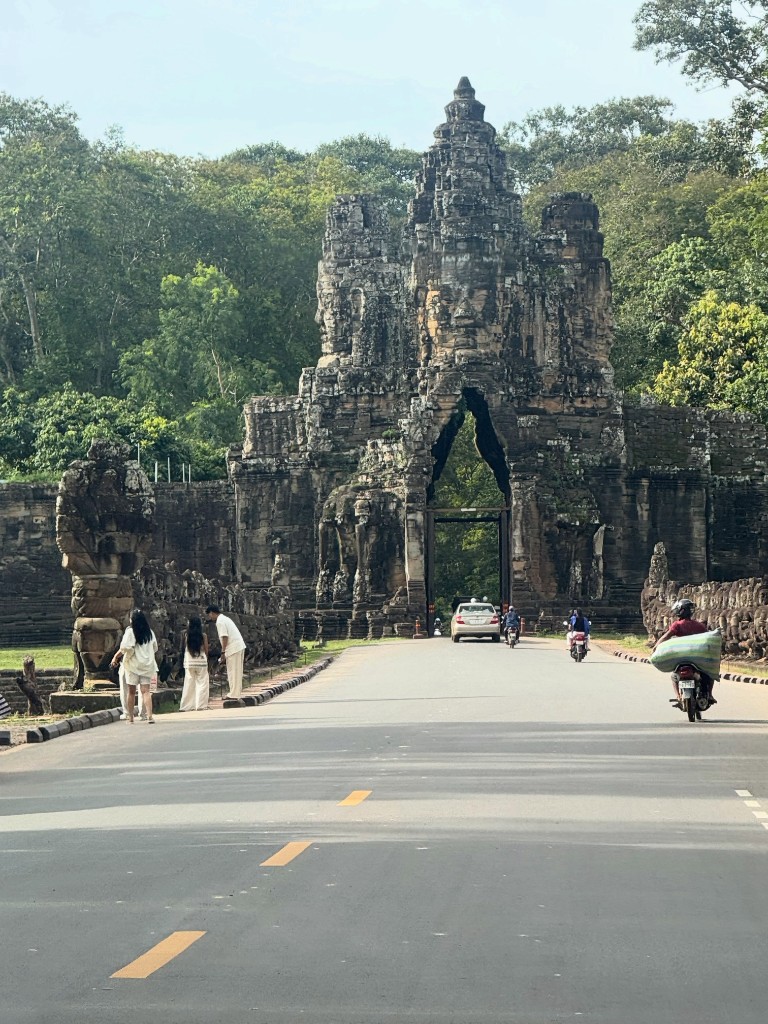
Angkor Thom announces itself before you even get inside. You pass through one of its massive gates, a stone face gazing down from the tower above while two rows of figures line the causeway, devas on one side and asuras on the other, each gripping the body of a serpent. Together they are churning the Ocean of Milk, the Hindu creation myth in which gods and demons set aside their rivalry and pull in opposite directions to churn out the elixir of immortality. Enemies cooperating toward something greater, frozen mid-effort for eight centuries.
It sets the tone for what waits at the center of the walled city: Bayon, the state temple of Jayavarman VII, and the strangest and most personal of all the Angkor temples.
The Four Gates
Angkor Thom has four gates, one for each cardinal direction, plus a fifth (the Victory Gate) that lines up with the royal palace. Each one carries the same design: a tower with four faces looking out in every direction, and the causeway of devas and asuras leading up to it across the moat. The South Gate is the one most visitors pass through first since it sits closest to Angkor Wat, and it is also the best restored, so it is the version most people picture when they imagine the entrance to the city.
I actually exited the car a bit ahead of the causeway to view one of the smaller step pyramids in the woods outside the entrance, then met up with the family near the entry way and snapped a quick selfie with my daughter in front of the row of devas.
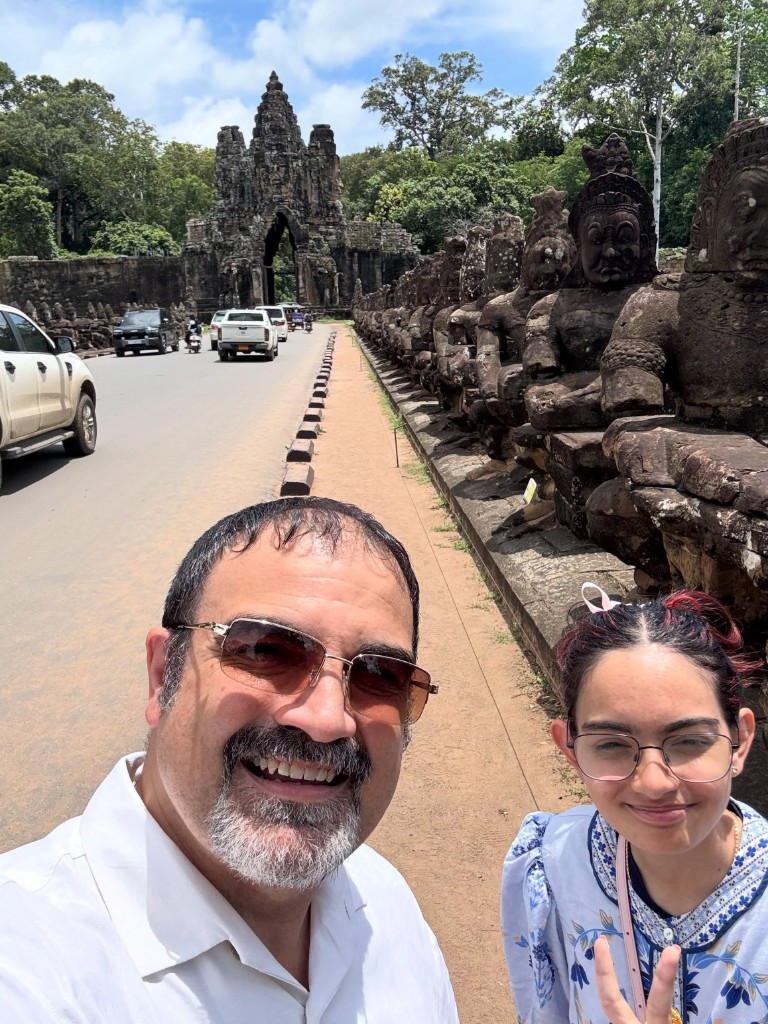
Walking or driving underneath the gate itself, the scale of it catches you. These were built as functioning fortifications, not just ceremonial arches. Once you are through, the jungle opens up and the road runs straight toward the center of the city, straight toward Bayon.
Bayon and Its Faces
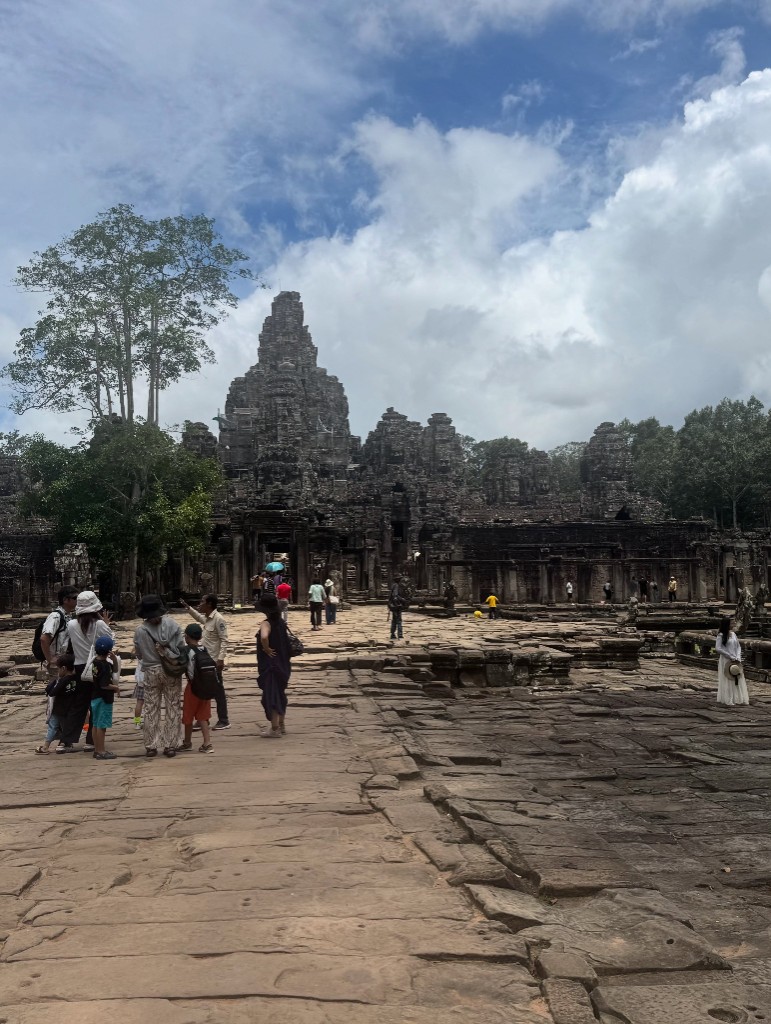
Bayon is famous for its faces, dozens of them carved into the towers, each one wearing the same faint smile. My first exposure to Cambodia was the images of those faces in the film Apocalypse Now, and I still remember how the imagery really put a grip in me, something both ancient and serene. Scholars still argue over what they depict. The leading theory points to the bodhisattva Avalokiteshvara, the embodiment of compassion, but others argue for an idealized portrait of Jayavarman VII himself, and at least one recent take argues for the tantric figure Vajrasattva instead. There is a good rundown of the competing theories in this piece on the Bayon faces if you want to go deeper on it. Standing among them, the ambiguity feels intentional. Wherever you turn, something serene is watching you. It is disorienting in the best way, like walking through someone else’s meditation.
The Bas-Reliefs
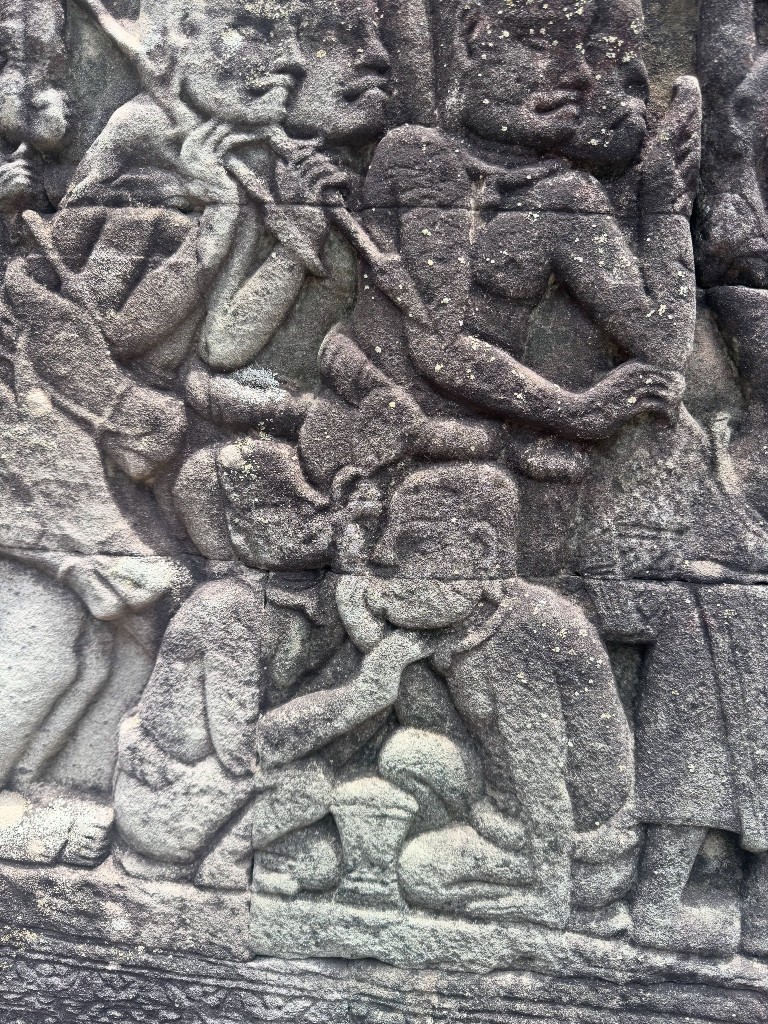
This was my second visit to Bayon, and this time I decided to go ahead and hire a guide at the entrance. Every site has various certified guides milling around the entrance offering their services. It was well worth it as the last time I just walked the walls and made assumptions about the bas-reliefs, while the guide could point out all the little details and stories behind them. The outer galleries show war, naval battles, and marching armies rendered in careful detail, but tucked between the fighting is ordinary Khmer life. People playing games, servants carrying drinks on trays, animals set against each other while spectators lean in, people preparing meals and celebrating life. Details I had walked right past the first time suddenly had names and stories.
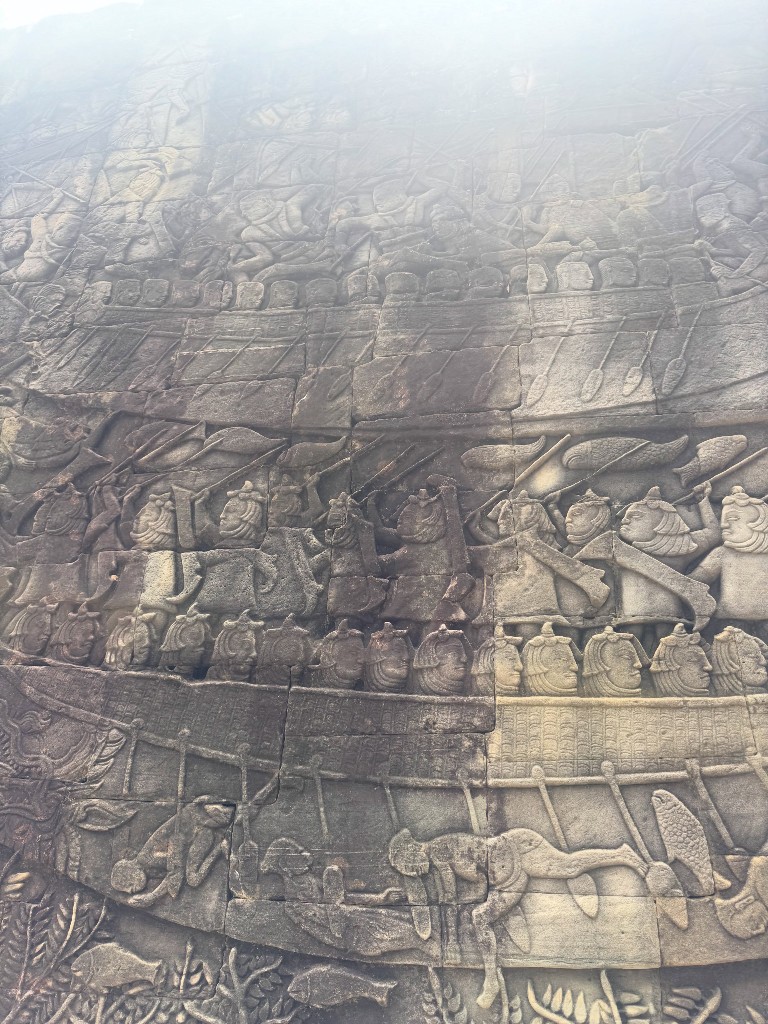
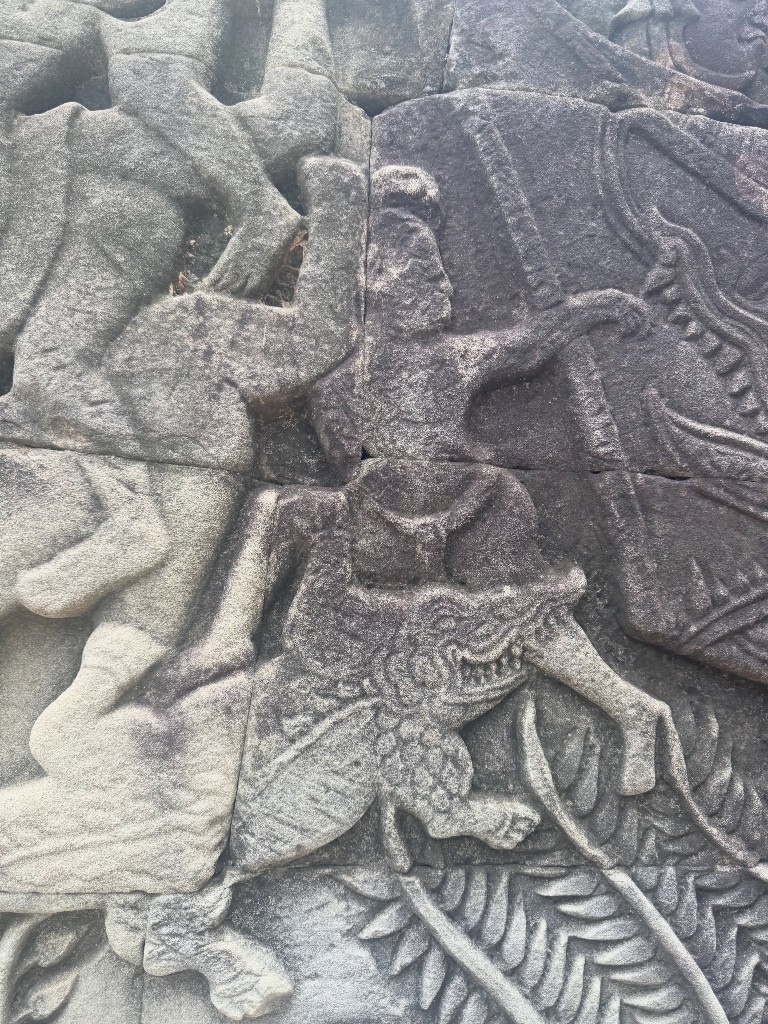
When we had first visited this site, I saw this carving on the bas-relief and thought it was a depiction of prisoners of war. Instead our guide pointed out that it was two men taking a drag from a tobacco pipe.
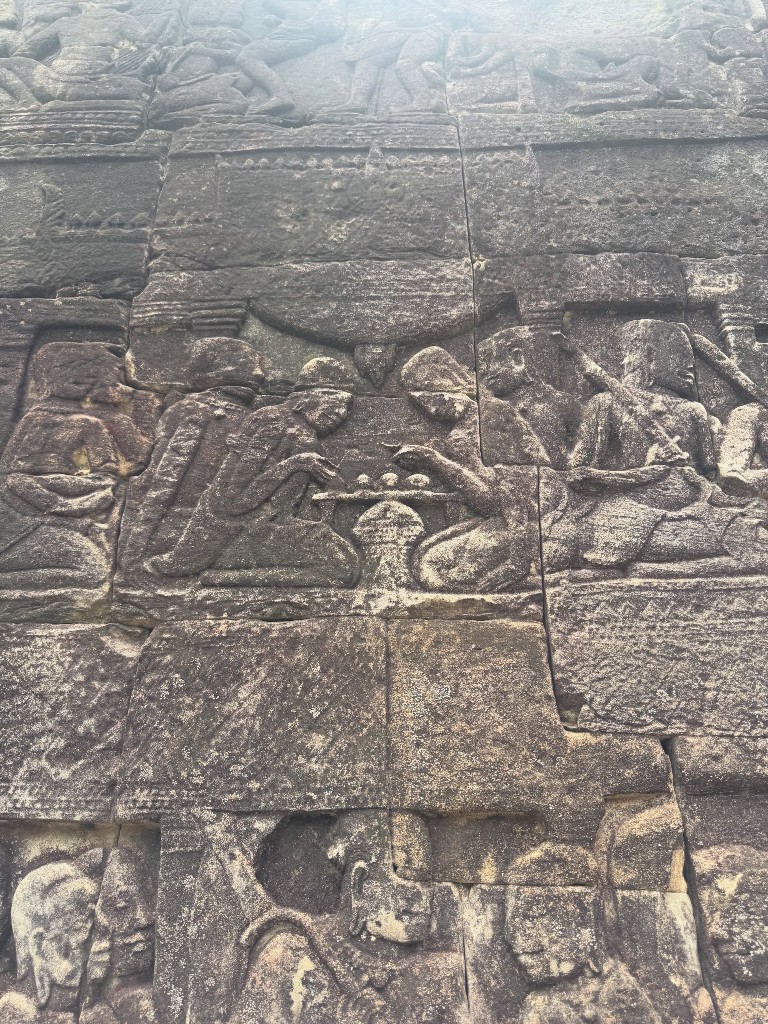
Right next to the fighting, ordinary life carries on. Two men hunched over a board playing a game while a crowd looks on.
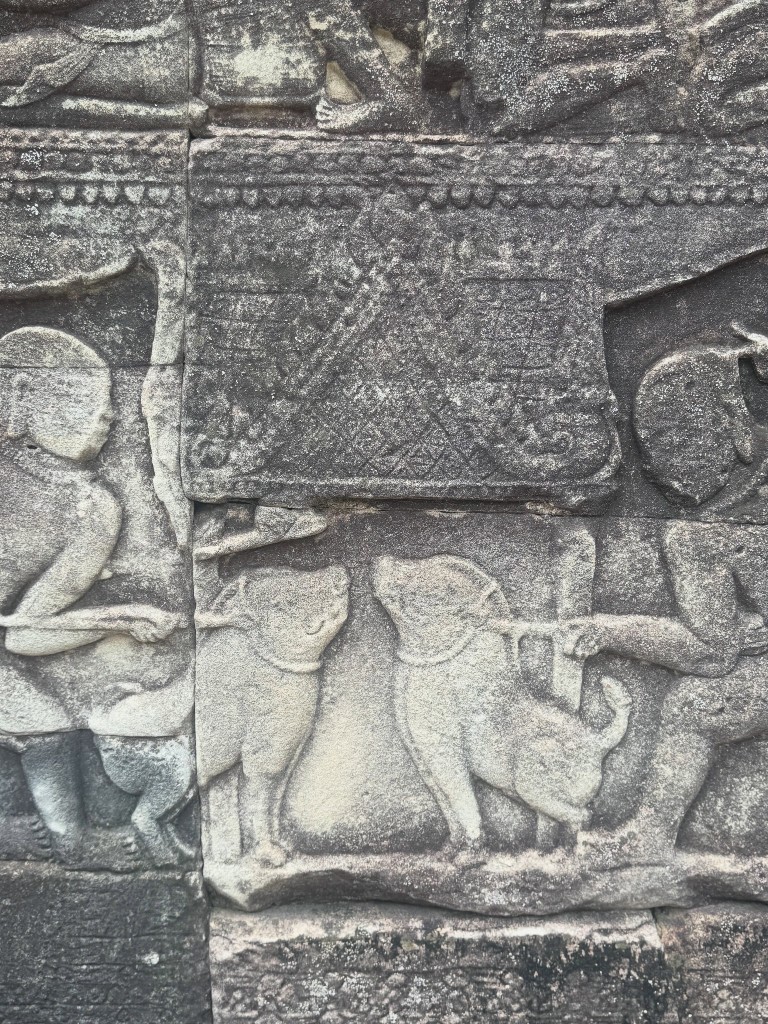
A little further down, animals set against each other with a crowd of spectators leaning in.
And servants carrying trays and offerings through a procession, carved beneath a canopy of leaves.
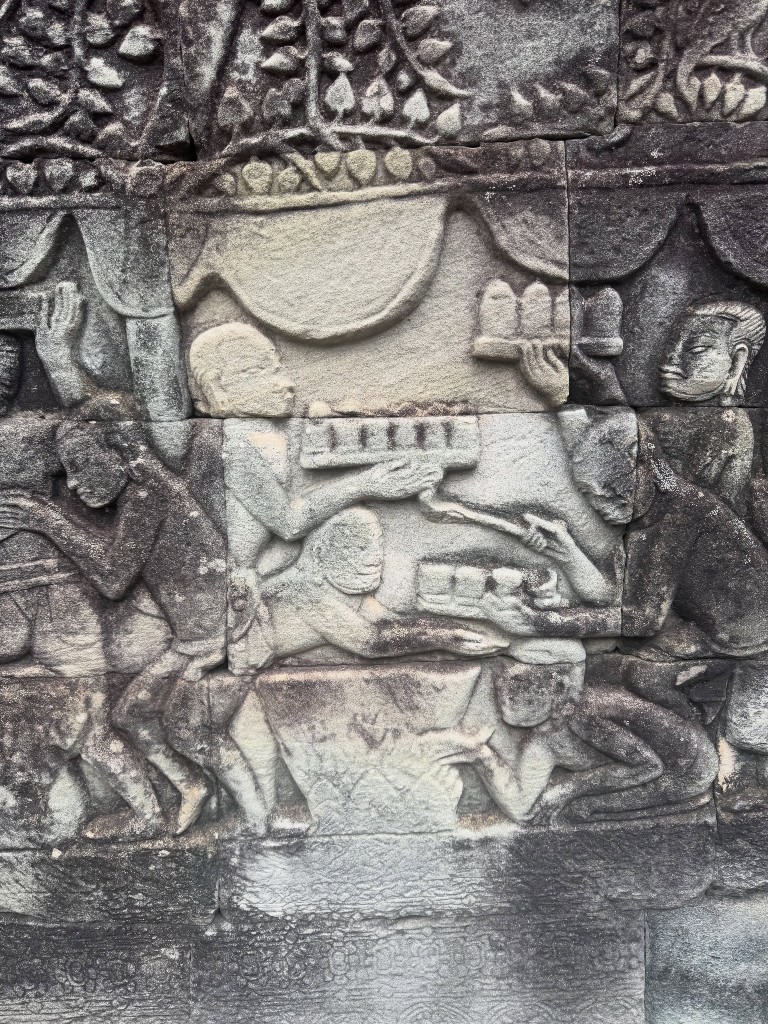
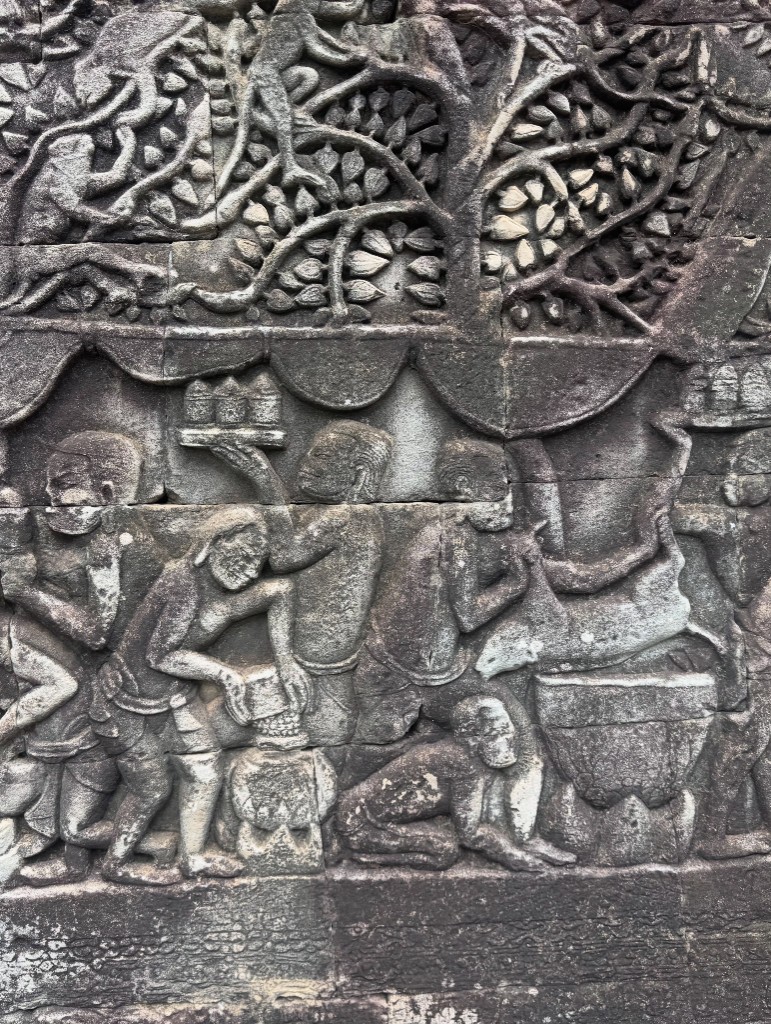
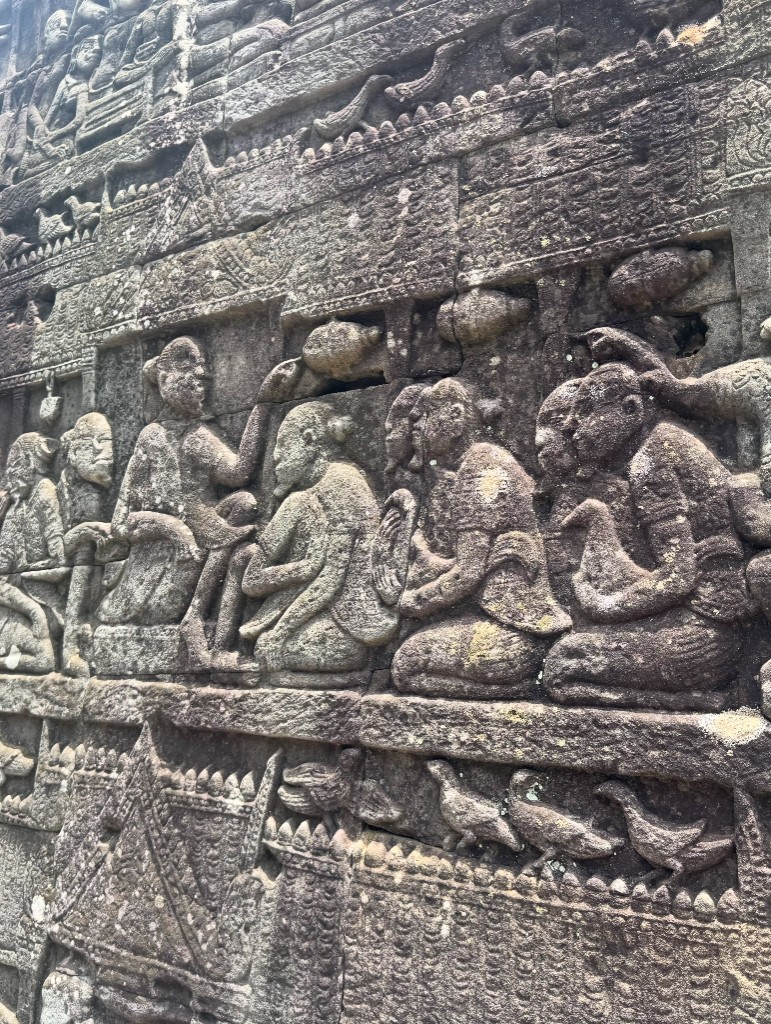
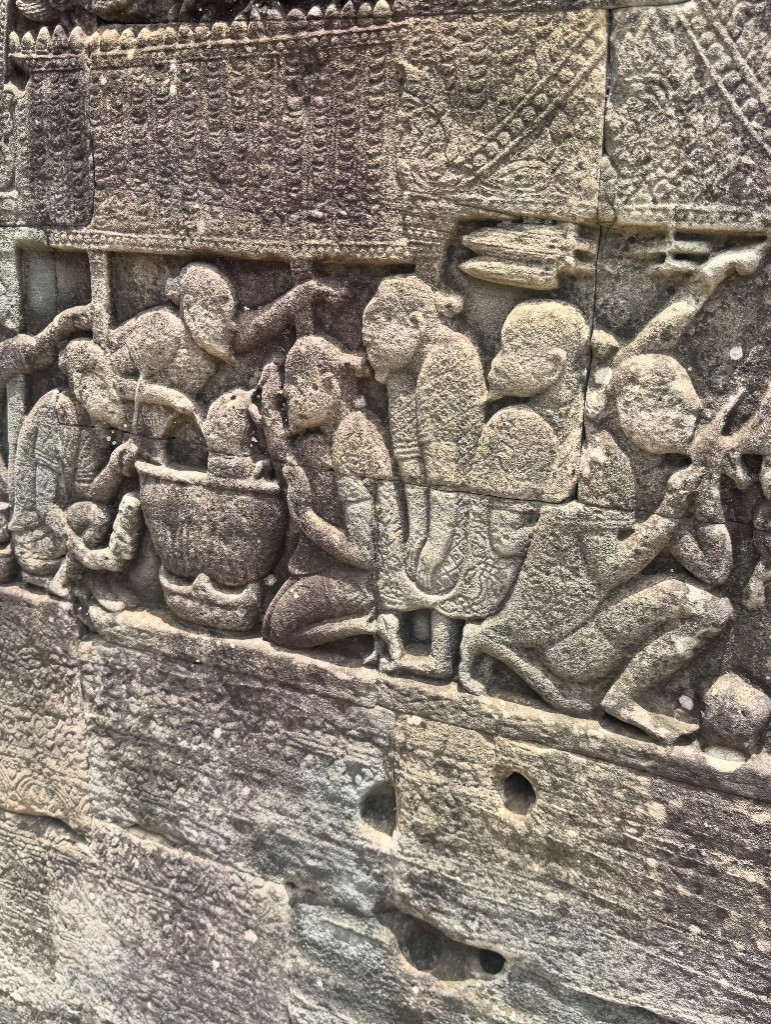
It reads less like royal propaganda and more like a documentary in stone, proof that daily life in the twelfth century was noisier and more familiar than we tend to imagine.
Still a Living Temple
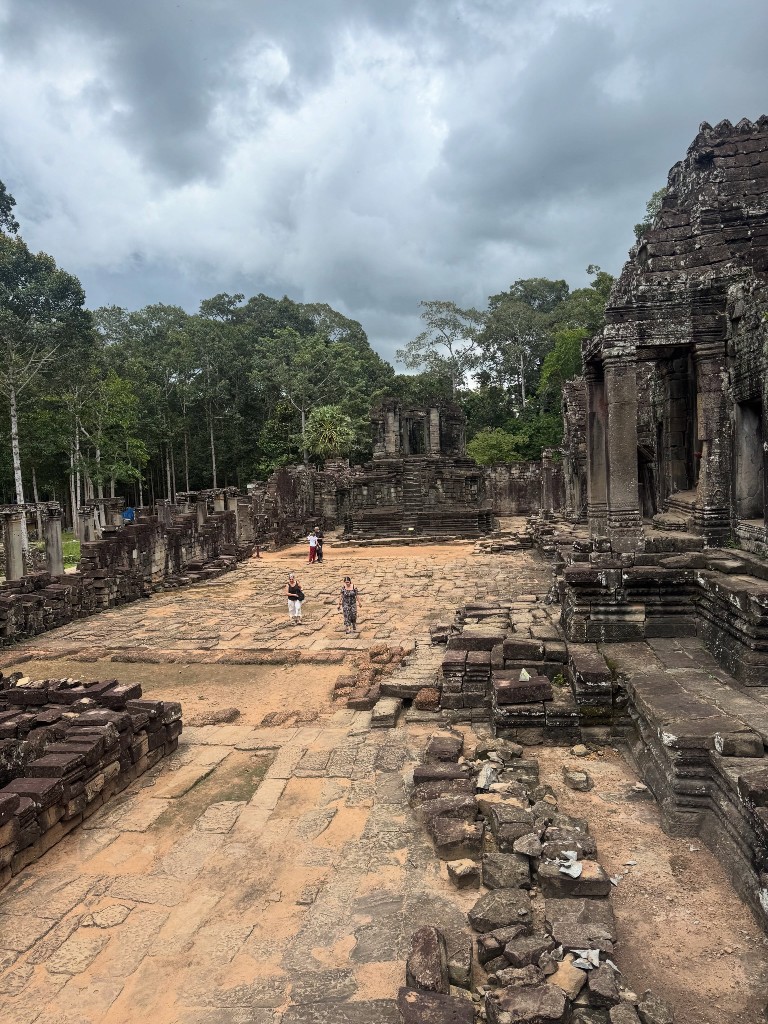
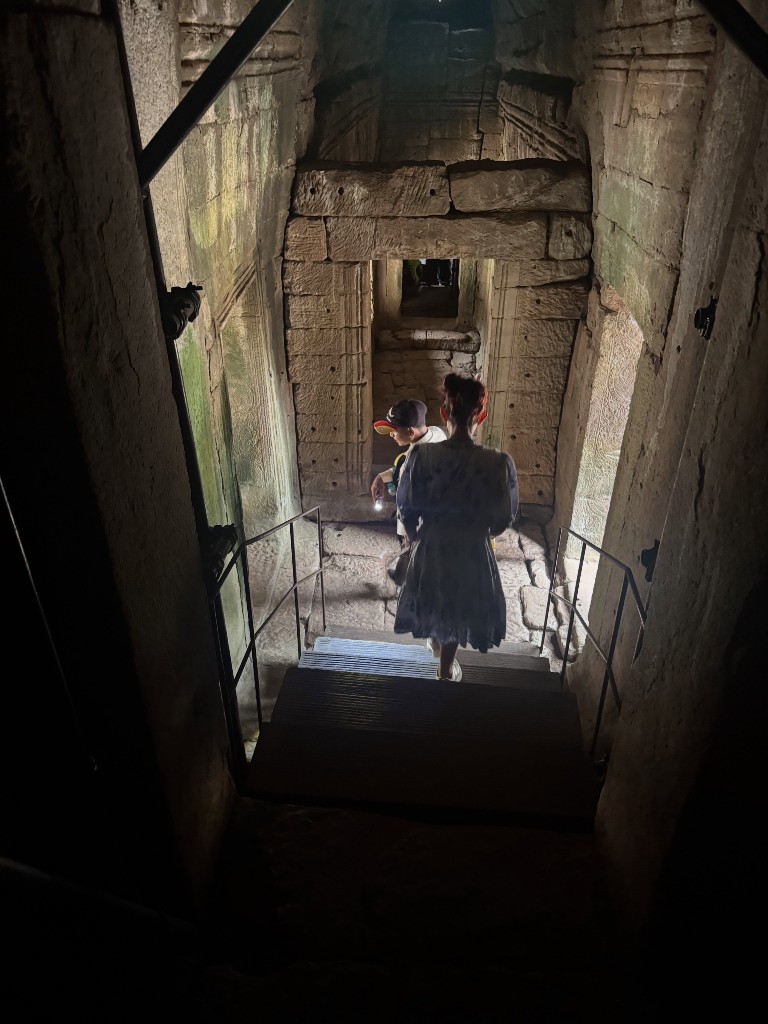
Deeper inside, the temple narrows into dim passageways where Buddha statues still receive incense and offerings. Bayon was built as a Buddhist temple and it never fully stopped being one, which gives it a warmth the emptier ruins lack.
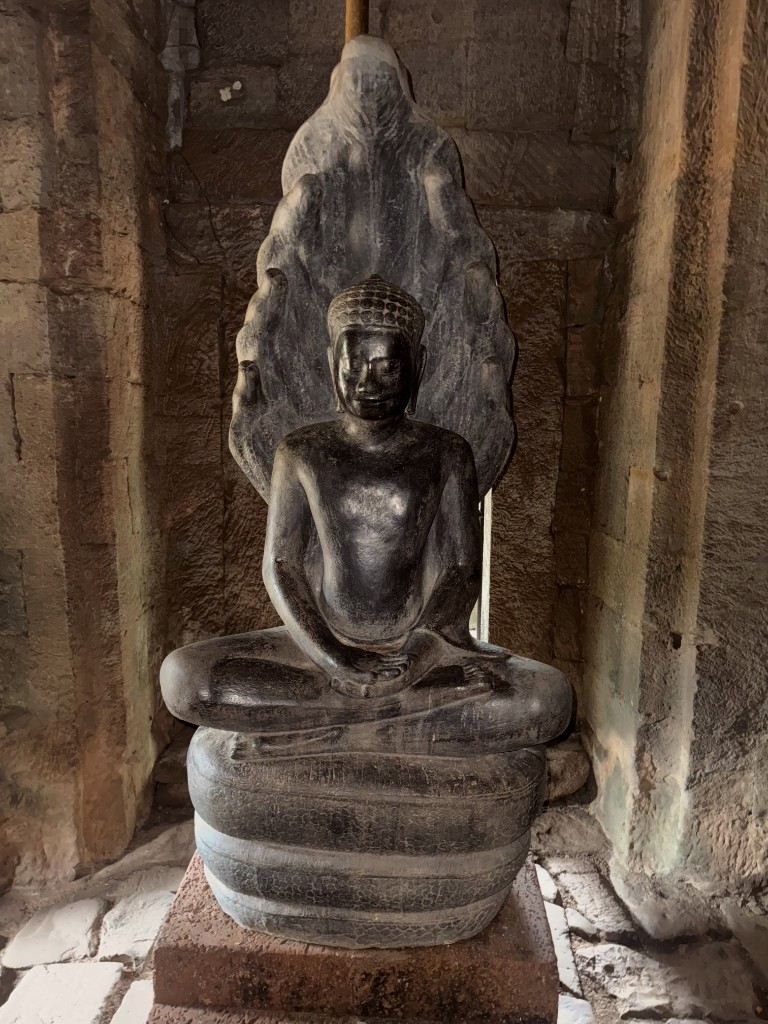
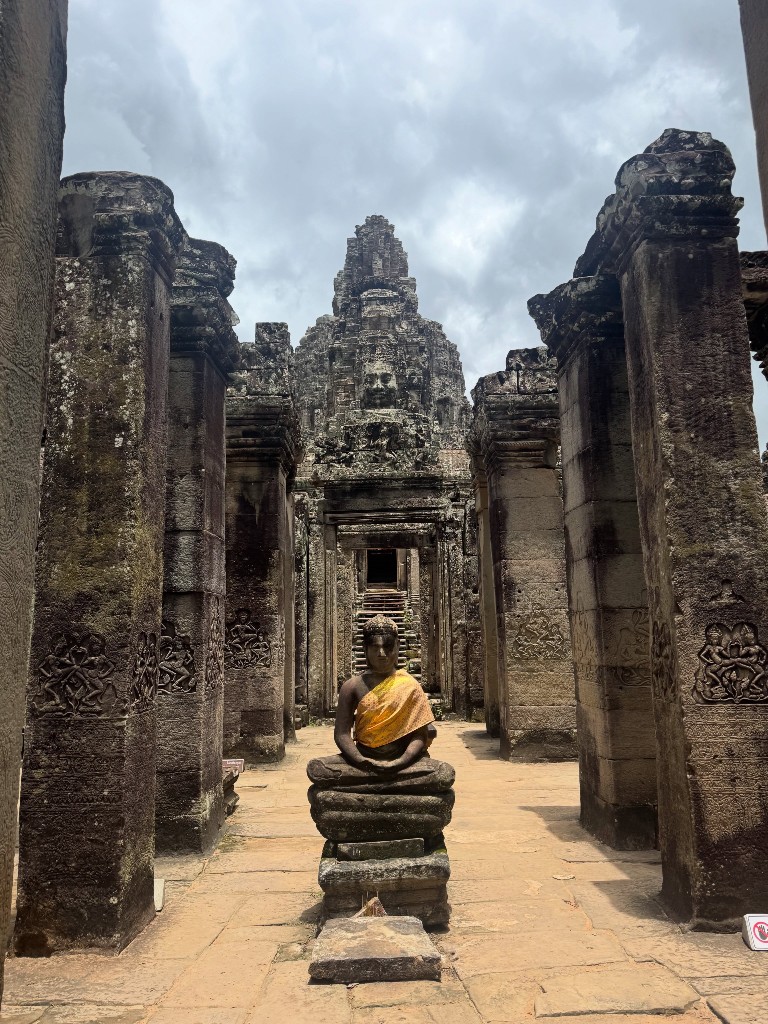
We entered and explored the intertwining tunnels within the center of the temple, visiting a well, shrines and other areas. My daughter and I stopped again at one of the entrances that connect the exterior and interior of the temple, another face looking straight down on us from directly overhead.
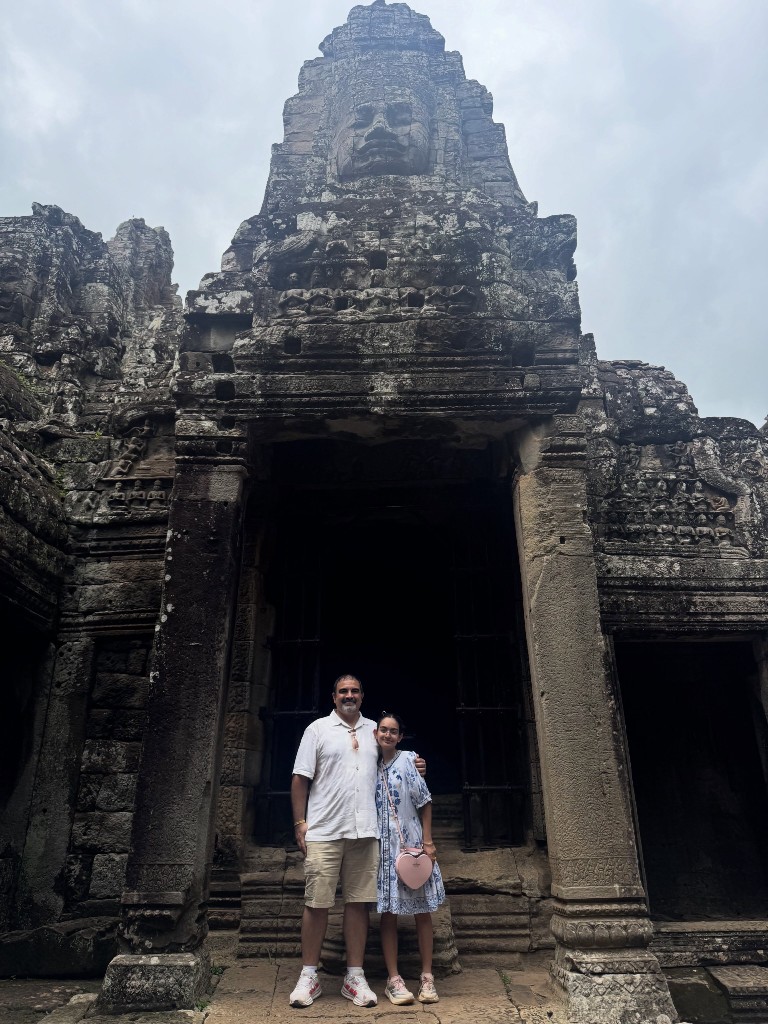
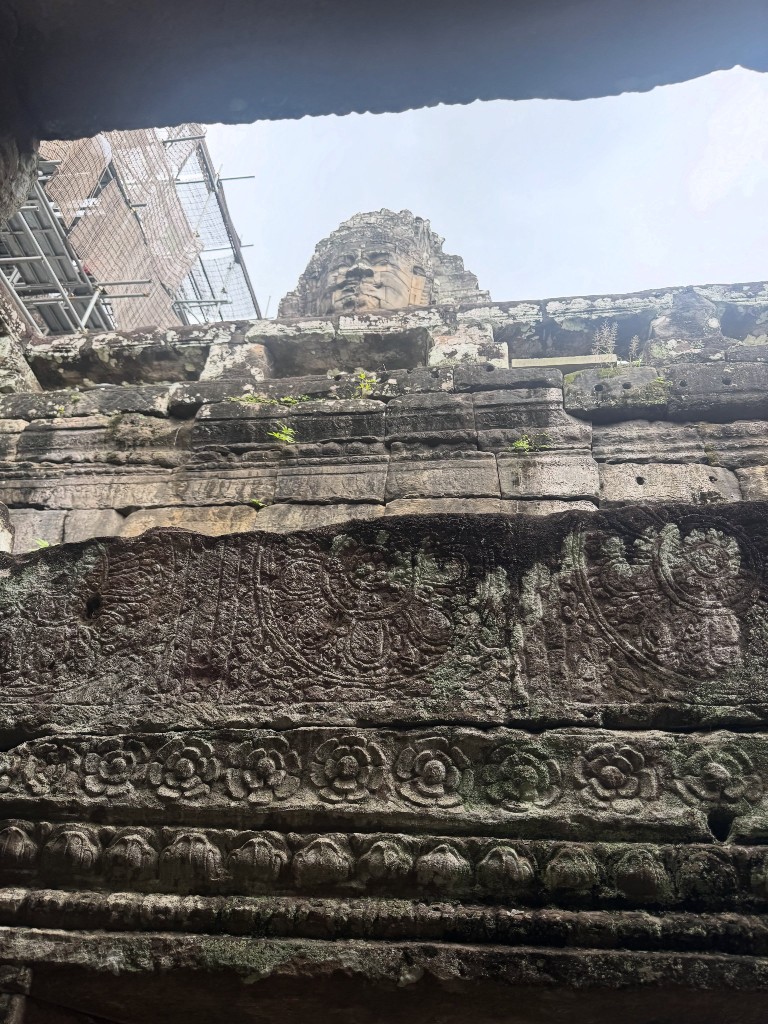
At a certain point our guide finished the tour, but there was still so much to explore so we continued climbing through the various tunnels and just taking it all in.
The Center of the Universe
Bayon sits at the exact center of Angkor Thom, and that placement is the whole point. It stands for Mount Meru, the mountain at the center of the universe in Buddhist and Hindu cosmology, with the city walls as the surrounding mountain ranges and the moat as the ocean beyond. But Angkor Thom was never only a temple. It was a working city, with palaces and terraces and shrines and the ordinary dwellings of the people carving those reliefs. Most of it is gone now, the wood and thatch long returned to the forest, leaving the stone to stand as testament to what was once part of a large metropolis, perhaps the largest of pre-industrial times.
I stuck to just the gates and Bayon here, but Angkor Thom holds a lot more inside those walls, the Baphuon, the Terrace of the Elephants, the Terrace of the Leper King, and what is left of the Royal Palace. I will get to those in a future post.


